Xinhui Li
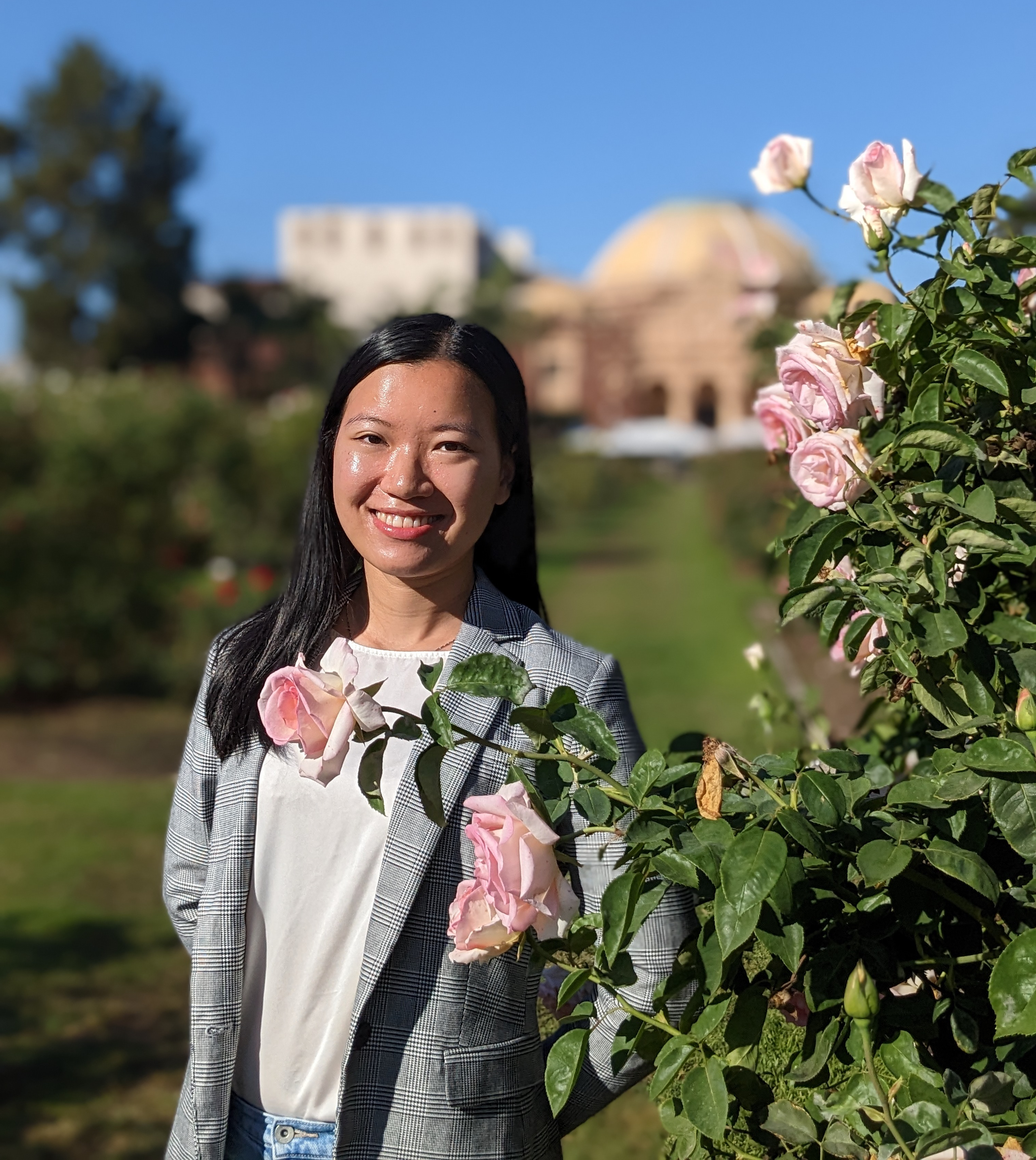
I am a postdoctoral researcher at the Center for Translational Research in Neuroimaging and Data Science. I completed my Ph.D. at the Georgia Institute of Technology, advised by Prof. Vince D. Calhoun and Dr. Rogers F. Silva. During my Ph.D., I interned as a data scientist at Amazon. Previously, I worked as a research engineer at the Child Mind Institute, advised by Dr. Michael P. Milham and Dr. Ting Xu.
I seek to understand principles of neural computation. To that end, I develop methods and tools to analyze large-scale neuroimaging data and study the brain in health and disease. My work spans these areas:
- Multimodal Representation Learning: I develop multimodal fusion methods that learn latent representations from high-dimensional, multimodal neuroimaging data, with a focus on identifying phenotypic and neuropsychiatric biomarkers.
- Related work: MSIVA, MMIVA, Torch-MISA
- AI for Mental Health: I design generative models, agentic systems, and neuroimaging-based metrics for characterizing and assessing neuropsychiatric disorders, with the goal of improving diagnosis and treatment of mental illness.
- Open and Reproducible Science: I investigate variability in neuroimaging preprocessing pipelines and contribute to open-source tools and standards to improve the reproducibility and reliability of neuroimaging analysis.
- Related work: Interpipeline Agreement, C-PAC, NMIND
- Cross-Species Neuroimaging: I build deep learning models for brain extraction and segmentation across species, including non-human primate MRI.
I love art in many forms. I often spend my free time at museums and theaters. I collaborate with talented artists to create artwork related to my research, such as Butterfly Effect and Schizosymphony. I also enjoy reading, playing tennis, and watching soccer games (Argentina/Barcelona).
As a first-generation scholar, I am committed to creating open, inclusive research culture. Please feel free to reach out if you would like to discuss research questions or collaboration opportunities.
news
| Jul 28, 2026 | I successfully defended my Ph.D. dissertation, titled Data-Driven, Multi-View, and Multimodal Representation Learning for Neuroimaging. I am now Dr. Li! 🎓 |
|---|---|
| May 19, 2026 | Our paper, Multimodal subspace independent vector analysis effectively captures latent relationships between brain structure and function, is published in Imaging Neuroscience. |
| Apr 7, 2026 | Our paper, Brain functional network connectivity interpolation characterizes the neuropsychiatric continuum and heterogeneity, is published in Imaging Neuroscience. |
| Jan 20, 2026 | Our review paper, Artificial intelligence for schizophrenia: from unimodal prediction to multimodal characterization, is published in Current Opinion in Psychiatry. |
| Oct 28, 2025 | Our paper, AI Psychiatrist Assistant: An LLM-based Multi-Agent System for Depression Assessment from Clinical Interviews, is accepted at the Machine Learning for Health Symposium (ML4H) proceedings track. Super proud of our brilliant students! |